

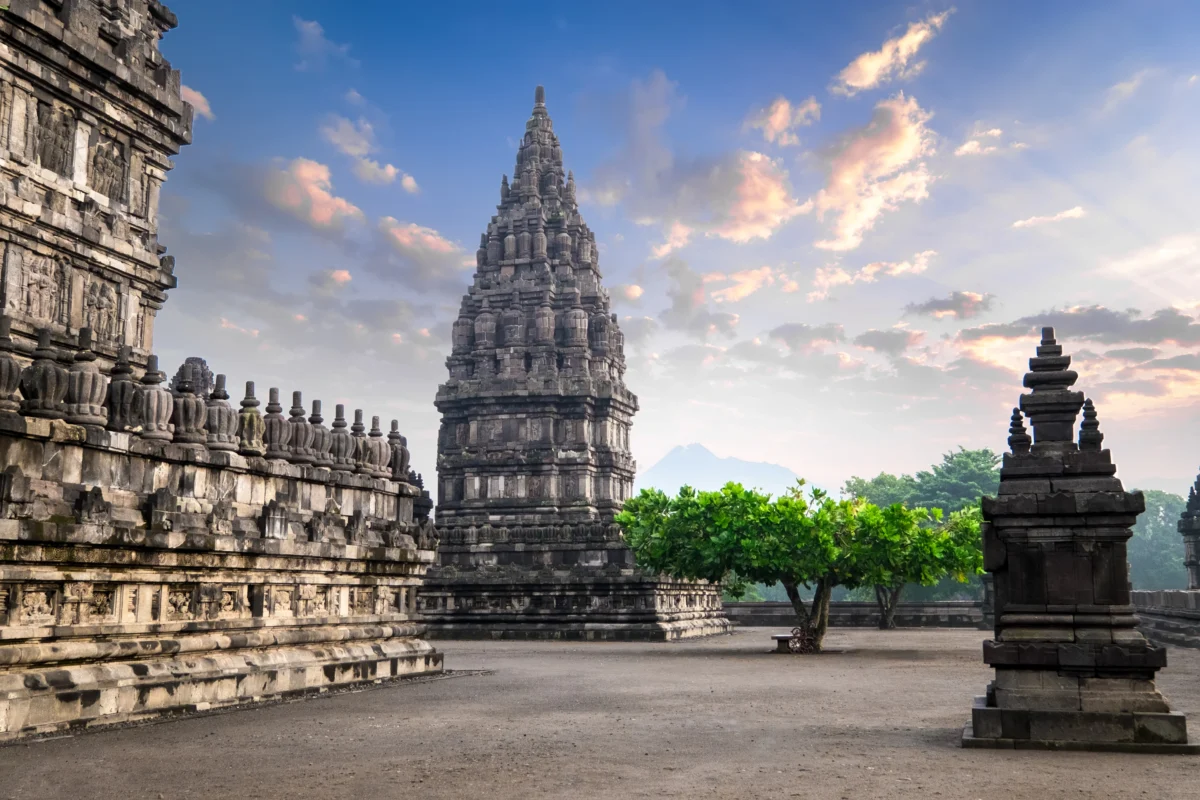
Yogyakarta Travel Guide – For many international travelers, Prambanan Temple is the moment the sheer scale of Indonesia’s history hits home. Unlike the serene, horizontal layers of Borobudur, Prambanan is vertical, jagged, and imposing. Its dark stone spires shoot 47 meters into the sky, demanding your attention from miles away.
As a dedicated Yogyakarta travel guide, we often hear guests say that Prambanan feels “theatrical.” They are right. If Borobudur is a whisper of meditation, Prambanan is a shout of devotion.
This Prambanan Temple guide is designed to help you navigate your visit with confidence. Beyond just opening times and ticket prices, we want to share the human context—the heat, the history, and the hidden corners—so you can focus on the experience, not the logistics.
A Brief History: The Legend and the Reality
Prambanan was built in the 9th century by the Sanjaya Dynasty. It is the largest Hindu temple complex in Indonesia and is dedicated to the Trimurti, the three aspects of God in Hinduism:
- Shiva (The Destroyer) – The largest central temple.
- Vishnu (The Preserver) – Standing to the north.
- Brahma (The Creator) – Standing to the south.
When you stand before these structures, remember that you are looking at resilience. Prambanan was abandoned for centuries and collapsed during a massive earthquake in the 16th century. What you see today is the result of painstaking restoration that began in the colonial era and continues to this day.
For locals, Prambanan is also the setting of the legend of Roro Jonggrang—a princess turned to stone by a powerful prince because she tried to trick him. Ask your guide to tell you this story; it adds a layer of romance and tragedy to the statue of Durga inside the Shiva temple.
Borobudur vs Prambanan: What to Expect
Many travelers visit both UNESCO sites, often in the same day.
- Borobudur is a single massive monument. It is about the internal journey to enlightenment.
- Prambanan is a complex of many temples spread out. It is about external expression and grandeur.
Trevmi Tip: Because Prambanan is a sprawling complex, there is less climbing than Borobudur, but much more walking on flat ground.
Prambanan Temple Guide: Tickets & Logistics
Navigating entry can be confusing for first-timers. Here is the honest breakdown.
1. Ticket Tiers
There is a distinct price difference between domestic and international tourists.
- International Ticket: Costs more (approx. USD $25), but it often includes access to an air-conditioned lounge with complimentary water/coffee—a lifesaver in the tropical heat.
- The “Combo” Ticket: If you plan to visit Borobudur as well within 2 days, buy the Borobudur-Prambanan Combination Ticket. It saves you time and money.
2. The Hidden Bonus: Candi Sewu
Most tourists visit the main Shiva temple and leave. Do not make this mistake.
Your Prambanan ticket includes entry to Candi Sewu, located about 800 meters north of the main complex.
- Why visit? Sewu is a Buddhist temple built right next to the Hindu Prambanan complex. It is proof that diverse religions coexisted peacefully in ancient Java. plus, it is usually empty of crowds, making it perfect for photography.
Dress Code: Respect Meets Comfort
Prambanan is an active sacred site. However, Java is also hot and humid.
- The Rule: Shoulders and knees must be covered.
- The Reality: Avoid tight synthetic fabrics. Wear loose linen trousers or a maxi skirt.
- The Solution: If you are wearing shorts, the ticket office usually provides a Sarong (a traditional wrap cloth) to wear around your waist. It’s colorful, respectful, and looks great in photos!
Best Time to Visit: Chasing the Light
As a Yogyakarta travel guide, we are often asked: “Morning or Afternoon?”
- Morning (8:00 AM – 10:00 AM): The coolest time of day. The blue sky contrasts beautifully with the black stone. Great for avoiding heat exhaustion.
- Late Afternoon (3:00 PM – 5:00 PM): The “Golden Hour.” As the sun dips, the temples glow in a warm orange light. The shadows of the intricate carvings pop, revealing details you miss at midday.
- Sunset: While you cannot enter the temples after 5:00 PM, staying nearby allows you to see the silhouette against the twilight.
The Ramayana Ballet: A Must-See
If you are visiting in the afternoon, stay for the evening. The Ramayana Ballet is an open-air dance performance with the illuminated Prambanan temples as the backdrop.
It tells the story carved into the temple walls—the kidnapping of Shinta and the bravery of Hanoman the White Monkey. It is visual, musical, and magical.
Exploring with Trevmi Nusantara
You can walk through Prambanan alone and see piles of impressive stones. But walking with a guide turns those stones into stories.
At Trevmi Nusantara, we specialize in connecting international travelers with the soul of Java. We don’t just drop you at the gate.
- We give context: Explaining why Shiva stands on a bull or why the temple walls depict a monkey army.
- We manage the pace: Knowing when to sit in the shade and when to walk to Candi Sewu.
- We handle the logistics: From securing the best Ballet seats to navigating the quickest route from your hotel.
Read: Borobudur Temple Tour: Sunrise vs Regular Visit – An Honest Guide
Final Thoughts
Prambanan is not just a checklist item. It is a place where history, legend, and art collide. If this is your first time in Indonesia, give yourself permission to slow down here. Touch the ancient stones (where permitted), listen to the wind whistling through the stupas, and imagine the thousands of artisans who carved these masterpieces by hand over 1,000 years ago.
With a little preparation and the right Prambanan Temple guide, your visit will be one of the highlights of your journey in Southeast Asia. Ready to explore the legends of Java? Contact Trevmi Nusantara to plan your visit today.
